Glossary

Glossary:

Altiplano: High plateau of the Andes at an altitude of about 4000 m.a.s.l. reaching from southern Peru over Bolivia to northern Chile
Arequipa: Provincial capital in the South Peruvian Andes. Second most important town of the country
asado: BBQ
Araucanía: The province of Chile in which Pucón is located
Ceviche: Kind of salad of marinated, raw fish or seafood
Cevicheria: Restaurant specialized in Ceviche
Chicha: maize beer
Chiriuchu: Typical plate served for Corpus Christi in Cusco
Chuño: Dehydrated potatoes
Combi: Minibuses, public transport in Arequipa
Cayma: District of Arequipa
Inca: a.) Precolumbian people in the Peruvian Andes, b.) The leader of the Inca nation
Machu Picchu: Quechua for "old mountain", a.) a mountain in the Cusco area, b.) the village close to the ruins of the same name, c.) the archaeological excavation of the ancient Inca settlement
Malbec: Red Wine, typical for Argentina
Mapuche: Native people of southern Chile
Nuevo Sol: Currency of Peru, S/. 1 = 0,33 €
Pablo Neruda: Chilean poet and winner of the Nobel Prize
Pisco: Destillate of grapes, Peruvian and Chilean national drink
Plaza de Armas: Generally the name of the main square of Latin american towns
Quechua: Spanish term for the language of the Incas
Santiago (de Chile): capital of Chile
Sillar: white, volcanic rock of which the old town of Arequipa is mainly constructed
Temuco: capital of the Araucanía
Valparaiso: Port town and UNESCO World Heritage Site
Yanahuara: District of Arequipa

Monday, 1 July 2013

Corpus Christi Cuzqueño

Corpus Christi Cuzqueño at the Plaza de Armas
On the next day we did the whole long journey back to Cusco. First walking through the jungle towards the hydropower plant, enjoying last views of the ruins. Then riding the bus again over that crazy road, the mountain pass and up to the high planes of Cusco. Because there had been several construction sites on the way it took us the whole day and when we finally reached Cusco it was almost midnight. At the end we found a deep and quiet sleep there in a hostel. The following day - our last in Cusco - the Feast of Corpus Christi took place. Cusco is famous for the celebration of this feast which here is based on Inca traditions mixed with Spanish Catholic rites. The whole plaza de armas is a huge single crowd through which countless huge statues of saints are carried by numerous man on their sholders. Each saint is accompanied by it´s own band which members as well as the bearers of the statue wear their specific costumes. The whole procession is accompanied by jugglers, dancers and all kind of costumed people. The most demanded spectator perches are the small balconies of the cafes and restaurants around the square which are full of locals as well as tourists. Around plaza de armas the folk fair goes on more profanely with bands playing in the streets in between huge beer tents. Their they sell beer in crates and chiriuchu a cold plate especially served on that occasion that contains guinea pig, chicken, sausage, cheese, tortillas, maize, spawn and algae . Here people  eat, drink and celebrate until the whole town seems to be drunk. It is a good spectacle to watch and we joined the crowed the whole day together with Luchin and Susan again. We also used the day for shopping, buying some souvenirs, delicious Peruvian organic coffee (which is also offered now in our cafeteria) and some things for our shop in Pucón. We said farewell to the navel of the Incan world and in the evening took a bus back to Arequipa. This time we had a real kind of horror trip. Leaving the bus terminal the bus crashed into the exit gate that way that it took the driver half an hour to get it free again. Until we finally came on the road, not feeling very confidently about the skills of the driver now, almost one hour had passed by. During the journey it came out that the bus did not have a functioning heating. Driving at an altitude of about 4000 m.a.s.l. over the high plateau this caused temperatures close to the freezing point inside the bus and a thick layer of ice on the inside of it’s windows. For sure you could not even think about sleeping there and even Peruvian passengers who already had brought their own blankets were complaining to the conductor who could not do anything neither. Best of all was, when I complained on the arrival in Arequipa I was just told that this was normal due to the low temperatures on the altiplano during night journeys. Fortunately Inés stopped me from causing a massacre right over there at the bus terminal.
The last day in Arequipa we spent strolling around the city, buying more souvenirs and being a little sad that our great journey already should come to an end. But in Pucón the kids and the cafeteria are waiting for us, why we went back there as fast as possible just spending one more night in Santiago before we took the bus back home.

It was a great time in Perú and for sure not the last time we have visited this amazing country. But now the daily routine is waiting for us and we are looking forward to our first winter season with our own busine

Friday, 28 June 2013

Machu Picchu

The Classic Photograph
From the hydropower plant it is an amazing two hours walk along a railway track in the valley of the river Urubamba to the village of Machu Picchu. The path leads through dense jungle of huge trees with parrots sitting on it, banana plants, lianas and we even saw an intensely green coloured snake. Climate here is very different from the highlands of Cusco already reminding you of the not so far amazon rainforest. It is warm and humid. During the walk you have lovely views of the river, sometimes flowing silently besides you, other times roaring down heavy, steep rapids breaking the calmness of the place with its noise. All is embedded in between steep mountains covered by that evergreen forest. That way you are almost surrounding the ruins of Machu Picchu, which are enthrowned majestically on the mountains in a sinuosity of the valley. During the walk you have first visits of ancient agricultural terraces and houses high up on the hills which already give you an imagination of the uniqueness of that place. It is a really divine and magic way to approach that unbelievable place.
Finally we reached the village at dusk quite exhausted but happy after the long, crazy bus ride and the following walk. Machu Picchu Village or Aguas Calientes as it is called due to the existing thermal baths is one of the the most touristy spots I have ever seen. It is a small village pinched in between the steeply rising mountains of the valley Urubamba. There are a post office, the railway station, a handicrafts market, the mentioned hot springs and apart from that nothing more than hotels, hostels and restaurants. There does not seem to exist a single building which does not serve for touristy purposes. Although it is quite weird and the village obviously just exists because of the close ruins it is not really an unfriendly place. Maybe because there are no big blocks of hotels existing just because there would be no place for building them. Besides there is no motorized traffic in the village apart from the transfer buses to the ruins which run on the only road to which Machu Picchu is connected. The only way to get there if not walking from the hydropower plant is by train. For lack of place the railway runs right through the village so that tourists in the outdoor dining areas of the restaurants are dining on the railway platform. So all in all it is a funny, lively settlement where you are reminded of the ruins and the Inca culture everywhere. The walls of all restaurants and hostels are full  with pictures of Machu Picchu, on the small main square is a fountain with a huge statue of Pachacútec, the ninth Inca, and the small steep alleys have all Quechua names.
We moved into our hostel, had dinner in a restaurant where we were informed about the next day´s tour to the ruins and soon went to bed to find a very uneasy sleep because the whole night a TV was running at full volume somewhere in the hostel.
The next day we stood up at 5 am to take the first bus up to the ruins which leaves the village at 5:30 am. We preferred to take the bus compared to walking up over more than 2500 steps which is the other possibility to get to the ruins from the village. At dawn we entered the site and already the first sight of it took our breath. We had a very informative and interesting guided tour for about two hours and then had the rest of the day to explore the ruins on our own. Well what can I tell you? The magnificence, uniqueness, powerfulness and magic of the place is beyond words. The whole complex is widespread on a mountain ridge in between the mountains of Machu Picchu (old mountain) and Huayna Picchu (young mountain). During the guided tour the sun was rising and submerged first the mountains and then the whole site in golden morning light. Deep down in the valley the river Urubamba is roaring and to all cardinal points you have breathtaking views of the Andes. The town itself was divided in two parts: the agricultural one with all the terraces and the habitational one with a huge central square, living quarters, temples, granaries and an observatory for astronomic research in which the Incas were quite experts. The whole town is connected to an incredibly elaborated system of irrigation and drinking water channels, that collect the water for the whole city at the base of mountain Machu Picchu. Unfortunately we could not climb none of the two mountains what for you would have to buy an extra ticket which were already sold out. But I made a small walk to the so called “Inca Bridge” a small bridge that is part of a path leading south from the ruins crossing the vertical western escarpment of mountain Machu Picchu in a breathtaking way. Over this bridge the town, whose construction then not had been terminated, was evacuated when the news of the conquest of Cusco by the Spanish reached the area. The Inca did not want the town to be conquested as well. That is why it is so well preserved, with the centuries was overgrown by the jungle and not rediscovered until 1911.
Now I could write pages about the magnificence of the place and all the impressions I had but none of it could reflect the deep admiration I felt. I just can tell you that Machu Picchu definitely is one of the places one should have seen in his life. Although it is so touristy and visited by thousands of tourists everyday it did not loose any of its magic. If you want to know more about it you will simply have to come here and see it with your own eyes.
Anyway after having spent hours in the ruins, including almost getting lost a few times, we went back to the village by bus, took a rest and went to the hot springs to relax our tired extremities. I do neither know how many kilometres we had walked nor how many difference in altitude we had covered during the day but our muscles definitely could use a relaxation. The hot springs of Aguas Calientes are at the edge of town in a small creek surrounded by jungle just a ten minutes walk from the centre. They have some 70´s style tiled pools and a nice cafeteria and bar, where from you can order drinks just beconning to the waiter by raising your hand. He brings the drinks to the pool where you can enjoy them soaking in the warm water. That was a perfect ending of that incredible day. We just had dinner after it and fell to bed where again we could not sleep that well this time because people were shouting the whole night all over the building.


Thursday, 20 June 2013

The Sacred Valley of the Incas

On the Way to Urubamba
After a few days in Cusco we started to the highlight of our journey: the forgotten Inca town of Machu Picchu. To honour the mystic and uniqueness of the place we took our time for it. The first day we started with Luchin and his girlfriend Susan to the Valley of the Urubamba river, generally known as the Sacred Valley of the Incas. Already the sixty something kilometres journey to the small town of the same name as the river is an adventure. You start from Cusco already at an altitude of about 3300 meters climbing up on the altiplano at about 4000 m.a.s.l. The tremendously scenic road winds in uncountable curves over the rugged high plateau which is covered by meadows, maize fields, eucalypt trees and lagoons in between which small villages with clay houses tiled with red bricks are dotted. Eventually a huge Andes range of impressive glacier covered peaks appears on the horizon covering it in its entity when coming closer. Just before you think to crash into the enormous peaks the plateau suddenly steeply falls down to the sacred valley and the town of Urubamba. From there we went a few kilometres on until we reached the small village where Luchin´s family run a small, nice restaurant which is specialized in guinea pigs and chicha the maize beer of the Incas which nowadays is Peru´s most famous drink, apart from pisco and Inca Kola. The latter is a bright yellow lemonade with an incredibly chemical taste of bubblegum. Nevertheless it is one of the few local drinks in the world which in it´s country sells even better than Coca Cola. (Which is why Coca Cola bought half of the company decades ago.)
So here in the lovely garden of that restaurant we were hearty welcomed by Luchin´s mother as well as numerous aunts, uncles and cousins. And it was time to try one of Peru´s best known delicacy: guinea pig. It was accompanied by potatoes (for sure), a noodle casserole and home made chicha with strawberries. It is definitely a good meat, low fat, tasty, just many bones for that amount of meat. We also were introduced into the secrets of chicha production and guinea pig breeding. After this tasty, hearty and interesting visit we went on to the village of Ollantaytambo half an hour downriver. This is an ancient Inca settlement what for the streets are narrow and cobbled. Small one floored clay houses are built on the fundament of Inca walls and in the village itself and on the steep slopes of the surrounding mountains everything is full with Inca ruins. You can find a bridge, an archway, a castle, temples, granaries and the impressive rests of many more buildings. We walked around the village a while before Luchin and Susan went back to Luchin´s family. Inés and I searched for a hostel and then kept on exploring town. As it came out the whole village was at a bull fight on a field at the edge of the settlement. There was an atmosphere like at a folk festival with musicians playing, traditionally dressed women selling food, children playing around and people exchanging news of the day or discussing about the bull fights. All around the place there may have been about thirty bulls awaiting their turn while always two of them did a fight inside a circle of people. It occurred that some now and then an escaping bull run straight through the crowd causing fleeing people all over the field.
When the spectacle turned to an end Inés and I took some drinks on the roof terrace of a friendly bar. While wondering about all the great things we had lived today people and bulls started to go home from the arena. Crowds of people came by, the bands playing and mainly young boys of up to not more than 15 years leading the immense bulls each one of may have weighed almost a ton through the narrow streets of the village in between cars, tourists, handicraft shops and street cafes as if the animals were small dogs. Full of impressions I fell into a deep dreamless sleep this night.
Early the next morning I stood up to walk to some of the close ruins. I climbed the steep path and enjoyed the perfectly constructed buildings, amazing views of the village and the surrounding mountains and the sunrise with a morning joint. Sitting there below some ancient granaries overlooking the sacred valley I felt a deep admiration for that incredible mountain people of the Inca.

Later in the morning a small bus picked us up to bring us to a hydroelectric plant from where we would have to walk to Machu Picchu. The bus ride was the next incredibly impressive adventure. A few kilometres after Ollantaytambo the road leaves the Urubamba valley winding up in various hairpin turns to a mountain pass at an altitude of 4300 m.a.s.l. just to fall down on it´s other side to the Urubamba valley again which over there has an altitude of just 1200 m.a.s.l. Driving over the pass the landscape changes drastically. While going up you drive through a dry valley with mainly grass covered mountains around and trees just next to the water streams. We passed by as close as we never did before huge glaciers and rocky giants of almost 6000 metres of altitude next to the pass, just to descend after it into an evergreen valley of jungle forest where bananas, coffee and cocoa are growing. All few kilometres you can see archeological sites of Inca ruins up to the most incredible altitudes where still today people are living in lonesome settlements. When we reached the river Urubamba again at the village of Santa Maria I was already totally stunned by these truly unbelievable landscapes, but there was still more to come. From Santa Maria the bus took a single track gravel road upriver again. Soon the valley formed a deep narrow gorge where the road was adventurously constructed into the almost vertical walls of the canyon about 300 metres above the riverbed. Inés who was sitting next to the driver almost died of fear on that part of the journey. After quite some time on that suicidal road ( with an even more suicidal driver) when I already started to think where the hell we are going to, we reached the village of Santa Teresa which appeared after a curve right out of nowhere at a place where the valley suddenly broadened again. From Santa Teresa where we used the lunch break not only to fill our stomachs but even to relief from the death ride we had been through the road went on - less frightening now but not less amazing - along the river Urubamba which seems to angrily run down here in between and around rocks as high as apartment buildings maybe 15 kilometres until we finally reached the hydroelectric plant where this amazing bus ride ended.

Thursday, 6 June 2013

At the Navel of the World

From Arequipa we went to Cusco the ancient capital of the Inca empire and according to their point of view the navel of the world. (Cosquo as the town is called in Quechua means navel.) The journey started with a surprise. We boarded the bus in the evening prepared for a overnight journey. Once we occupied our seats a man came and asked us for our tickets. We showed them to him but he kept insisting on a "boleto de embarque" - an embarkation card which we obviously could not show. The man got angry and we had to leave the bus again. Having no idea what is going on we followed him quite astonished and confused. As it emerged when leaving from any train, bus or air terminal in Peru you have to buy an embarkation card as kind of tax to use the transportation premises which of nobody had told us. It would be the duty of the conductor to control the payment of that which in our case was not done so we could enter the bus without having paid the embarkation card. So at the end the unkind man apologized to us but a big discussion with the responsable employees of the bus company followed which took almost an hour. Finally the bus could leave and definitely a little relieved we started our journey to the navel of the world.
We came there early at the next morning and immediately liked the place. Cusco is situated in a basin at an altitude of more than 3.300 m.a.s.l. surrounded by scenic mountains that reach more than 4.000 m and are vegetated by grass and only a few mainly eucalyptus trees. We found a nice hostel, checked in, took a rest to relax from the overnight bus ride which is not as comfortable here as in Chile because roads are partially in quite bad conditions and leading in many curves up and down over the altiplano. Then we started to explore town. Cusco is very hilly with almost no plain street or square. Because the colonial town is built on top of the ruins of the Inca town you see many typical Spanish colonial buildings constructed on basements of Inca walls. Highlight of  the latter is a huge 12-angled stone in the fundament of a wall which is that well arranged that you can't even put a needle in between it and the neighbouring stones. The roads  are very small, many of them too narrow for cars because the Incas did not know the wheel. Apart many of them are very steep or even constructed as staircases. As in any Spanish colonial town there are churches and monasteries at almost every corner. There is an artist's quarter where many painters, goldsmiths, tailors and other artisans from all over the world have their workshops and you can find a lot of cosy art cafes and stylish restaurants with fusion cuisine from all continents.
The next days we kept exploring the town and its surroundings. There is a huge market where you can find everything from restaurants with typical Peruvian kitchen, vegetables, fruits, cheese, meat, handicrafts, flowers, herbs, clothes and  even strange things like coca flour, dried lamb foetuses for ceremonial purposes or stalls where they sell tobacco, ayuhasca, san pedro cactus and other hallucinogen plants which here are legal due to their traditional use as ceremonial plants by the indigenous people. These holy ceremonies are even offered here to tourists. 
One day we did a horse ride to some close Inca ruins. It brought us to the ruins of Saqsaywaman, a kind of holiday retreat for the Inca just out of downtown and another archaeological site called Point X because it is still not known what it was used for. There are the ruins of some houses around a small hill which is burred completely by many caves and subterranean corridors which you can explore. Then we rode to a ceremonial cave where you can find images of the Inca trilogy of condor, puma and snake, representing the three worlds in which the Incas believed, caved out of the rock.
Finally we celebrated Inés' birthday in Cusco together with local friends. They showed us Cusco's nightlife which is quite entertaining. There are many bars and discotheques where are all kinds of music are played. Either live on stage or played by Djs you can here everything from rock with traditional Andean elements over salsa to nowadays chart hits. What they have in common is a very unique mixed crowd of tourists, local people, youngsters and even elderly people dancing to the salsa rhytms.
So Cusco is definitely a nice, interesting place with a mystic, historical touch on the one hand and an international one on the other hand. A place where you can breathe the spirit of tha ancient Inca empire at every corner and this spirit is still alife.

Thursday, 23 May 2013

Vacations

One of the Numerous Kitchens in Santa Catalina Monastery
Finally Inès came to Arequipa. I stopped working. (As I mentioned before there had never been that much work so it doesn't really matter.) Now we are enjoying more than two weeks of holidays. We never had so much time together without any responsibility or work to do, so we are really enjoying having just time for ourselves and nothing else to do. I picked her up at the airport and the last days we made tourist program in Arequipa. I showed her round town, we visited some churches and old colonial houses and the nice quarters of Cayma and Yanahuara. The highlights for sure were on the one hand the visit of the museum of "Juanita". She is something like the Peruvian version of "Oetzi", that corpse of a primeval hunter that was found on a glacier next to the Austrian-Italian border somewhen in the nineties of the last century. About the same time - in 1995 - archaeologists discovered the corpse of an Inca girl that was uncovered from the eternal ice of the glacier on top of Ampato Mountain in the Arequipa region due to the eruption of a nearby volcano. Conserved in the ice for about 500 years it is the best preserved precolombian corpse ever found. Because Incas did not mummify "Juanita" still has all her internal organs and bodily fluids as well as hair, nails and teeth. Just her face which seemed to having been outside of the ice is dehydrated. Nevertheless her discovery was an archeological sensation and the first years after it "Juanita" spent in various cientifical laboratories in Peru and the United States. There it was found out that she has been an about thirteen years old girl that was offered to the gods. In further expeditions to Ampato Mountain two more sacrified youngsters were found but none of them as well conserved as "Juanita". Finally she found her last resting place in her own museum in Arequipa together with burial objects found on the three burial sites. You can view her there laid out in an vitreous freezer of Japanese origin where she is conserved under the exactly same conditions that had maintained her in such a good shape for centuries under the ice of Ampato Mountain. It is a little scary experience seeing her there but as well it is amazing in which good state her body  still is and the guides of the museum recall the last months of her life and what is known and was found out about it in such a formidable way (even for children which of had been some in our tour) that you really feel sent back into this time and taking part of the whole holy precedure yourself. It really awaked my interest in this ancient fascinating culture of the Incas.
The other highlight was the monastery of Santa Catalina. It is a huge building complex right in the city centre covering a whole block of houses with an area of more than 20.000 sqm. What it makes it that interesting is the fact that for 391 years from its foundation until it`s opening to the public in 1970 it was totally concluded from the outside world. Nuns who entered it not even left after their death but where buried within the monastery`s walls on it`s private cemetery. So a city within the city came into being. There are squares, alleys which have their own names, various kitchens, baths, a laundry, kitchen gardens and the cemetary. So the monastery existed almost self-sustaining. The only contact the nuns had with the outer world was via so called "locutorios". That have been small rooms with wooden lattices in the windows through which one could talk to someone outside. Because the whole monastery is surrounded by a high wall you forget about the hectic city life outside when you are in not hearing any of the city`s sounds. We spent more than four hours exploring this fascinating place which in some parts reminds you of  the set of a historic movie. You really feel the spirit of the ancient life in a monastery strolling around through the small alleys and it is full of fantastic photo motives. I have never ever seen something comparable so far.
Apart from that Inès and I enjoyed Peruvian kitchen trying out all kind of food you would not get in other places like alpaca meat or so called pre-Inca-cuisine which are mainly stews of fish or alpaca with potatoes and maize quite strangely but tastily spiced. so our holidays are also a culinary delight.
Because we really got fascinated of the Inca culture by the visit of "Juanita" our next stop will bring us to Cusco, the old capital of the Inca empire and Machu Picchu the most famous of their archeological sites.

Monday, 13 May 2013

A big Party and Some Funny Facts

One of the last weekends I had been to a good party with my colleagues. It took place in a huge bamboo covered hall which housed various restaurants and bars the funniest of which was called "Mister Fish - Cevicheria, Bar & lo que quieres que sea" (Mister Fish - Cevicheria, Bar & whatever you want it to be). Outside there was a big grassy terrace which of you had a wonderful view over nocturnal Arequipa. Inside in the center of the hall was a kind of stage where first really cool skate, BMX and slackline performances took place. Later on that was the huge dancefloor where the whole crowd danced to the tunes of a good local live band followed by an awesome DJ-team which rocked the place until early morning. It was a great night out including everything you could wish: a fascinating location, action, big tunes, cheap drinks and an incredible number of beautiful girls as almost everywhere here. Once more I came back home to the hostel at dawn.
When not partying I am still on the river either working or for example moving some rocks which had been lying in the line of a tricky rapid as we did last week. And I am still wondering and keep on smiling about Peruvian idiosyncrasies. For example Peruvians have a weakness for fireworks. You can see and hear them daily somewhere over the town. Seems like locals are celebrating almost everything with fireworks and various times I have seen big bamboo constructions assembled with fire works waiting to be sparked on a public square or in a backyard.
Female Peruvians are definitely keen on nail polish. Before coming here I did not know in which variety of colours nail varnishes do exist. And normally it doesn´t remain with just one colour. You see purple hearts on red nails, yellow cats on green ones, black flashes on blue ones and so on. Even elderly women with colourful painted nails are a common sight.
The garbage collection truck drives around town playing loud music or announcing garbage collecting tips over speakers. So everybody knows when to put out the rubbish bags on the street to be collected and indeed when the car is coming all doors open and people deliver their waste to the garbage truck.The range of music played varies from Peruvian classics like "El Condor Pasa" to Mozart.
Sometimes I pass by small shops which sell mostly kitschy things of Chinese origin - all for just one Nuevo Sol. For some reason all these shops are promoted by a kind of mountebank. A man who in florid phrases loudly announces to the public via a microphone which sensational products they offer. Considering the real value, usefulness and quality of the offered products an almost surreal kind of publicity that always makes me smile.
So daily there are still new things to discover and wonder about which doesn´t ever let the place become boring.

Monday, 22 April 2013

More City Walks and a Competition

At the Kayak Race
I keep strolling through town regularly if I do not have to work. Each of this walks offers me more insights into city life and I get to know  the surroundings better each time. As I realized meanwhile Arequipa is full of churches and monasteries. Finding them in almost any block of the old town makes the city appear like an South American Salzburg. Nowhere else I have seen such a concentration of religious buildings so far. Once I entered a quarter where these churches and monasteries interestingly alternated with dubious bars and drinking holes and so called restaurants with blackened shop windows towards the street. I do not really want to know what is going on behind them. Quite a frequent sight on the pavements over there where nuns and prostitutes. While it was quite obvious who are the nuns it took me a while to realize who are the prostitutes. They are just standing around amongst the public crowd adressing possible clients passing by with half whispered invitations to go with them. It was quite interesting to see this weird mixture but I also know that I will avoid this neighbourhood during nighttime and drink my beers somewhere else.
In sharp contrast to that just around the corner I found a maternity clinic with uncountable centres of prenatal diagnosis as well as  shops of baby clothes and nappies opposite the road. Here the crowd on the street were mainly pregnant women, happily smiling new grandparents with bouquets in their arms and young jubilant couples with new born babies on their arms. Almost all of the babies for any reason had pink woollen hats on their heads. Maybe they were given to them by the clinic. Anyway this road may be Arequipas happiest place where indeed everybody walking around seems to be smiling, laughing and celebrating.
Behind that quarter I discovered a big commercial district spanning over a couple of city blocks. Most of them entirely have been markets with small shops along even smaller hallways selling everything from computers over shoes to toys. As I realized each block or part of it had its own purpose. Half a block you could only find shoe shops, then a couple of hallways had only aquarium and fish to sell while in the rest of the block you just found sexy underwear. The next block was full with computer shops, followed by a part where just costumes and baby clothes had been sold and so on. It was quite strange to walk through this corridors where a continuous stimulus satiation prevailed that just was changing all few meters. Out on the streets sweets and different fast food was sold by uncountable stalls leaving the air with an incredible mixture of smells. I have seen quite some markets in various countries but can´t remeber any being so extensive like this one here.

Yesterday finally a Kayak competiton took place on Chili River. Arequipa is one of the few places in the world where such an event can take place on a natural river right in the centre of a town of this size which makes it predestined to hold it here. The race was organized by the company I am working for. I surely did not participate because I do not kayak but nevertheless helped in the organisation, made safety for the sportsmen and took pictures. The event was quite a success, all participants enjoyed it and about 500 spectators watched the activity from the shores and the two bridges the kayak slalom took place in between. At the end all were happy and we celebrated the success first with a BBQ in the deposit and then with a night out in town. This was a good fun and took until early morning. So today I am happy but quite tired and for sure will go to bed soon to rejuvenate for the work of the next days.

Saturday, 20 April 2013

Exploring Town

The Towers of the church of Cayma
Meanwhile I am guiding on my own. The first time was by chance because Christian, another guide, was struck by diarrhoea this day and so I had to replace him. Actually I would have wanted to practice once or twice more but so I just had to jump in at the deep end. Finally the only ones who jumped, or rightly fell into the water were two of the passengers in a rapid. So far it was the first and only time that had happened to me and with every trip now I am getting to know the river and its personality better and better. And everytime I like it more than the last.
For there's enough time for doing other things still, when we are not going to the river, we constructed an earthen stove topped with a small volcano which off two kayakers are paddling down. The last days we prepared things for the kayak race which is going to take place tomorrow on Chili River.
Being used to the place already I also use spare time to explore the town more precisely. These days I went back from our base to the city by foot passing the Cayma and Yanahuara boroughs of Arequipa. Those are very nice middle class quarters which managed to preserve their original colonial village character. So you see old colonial houses and alleys mixed with mansions and modern high-end blocks of flats. There´s a nice mixture of beautiful garden restaurants and simple family run plain fare places. At the corners there are everywhere these typical small mom-and-pop grocery stores which are so common in most places but in Europe died out almost completely already. The center of these neighbourhoods always is a square with palms growing, a church, a fountain and one or more statues of national or local heroes. The side alleys of these squares are bordered with colonial buildings which become less and substituted by the typical simple brick houses with flat roofs of which the reinforcement steels are still jutting out or modern mansions the further you walk away from the square.
On Yanahuaras very nice main square there is a viewpoint which of you have amazing views of the Chilina Valley, Arequipa and the surrounding volcanoes where I spent quite some time to take pictures.
On another of these walks I discovered a huge market hall where they sell everything from furniture over meat to clothes. It was a loud, crowded place which smelt of hundreds of things at the same time: meals of the small restaurants, flowers, meet, seafood, fruits, spices, perfumes, petrol and many more. But what attracted my attention most was the row of fruit juice stalls. One entire lenght of the hall were lined of those one next to the other, all kind of fruits piled in front of them to a height that you just saw the faces of the woman who attended them behind. I chose the loveliest face and had a tremendous mango-maracuya-juice while chatting with the young lady.
For sure I also had to investigate Arequipa´s nightlife. I went to take a beer with some fellows in one of the numerous bars in the centre of Arequipa. Most of them are inside old colonial buildings whose lithic arches give them a very unique and cosy atmosphere. Some of them even have roof terraces where DJs perform the whole night and you can enjoy good views over the city as well as cheap beer and cocktails. Here is where you as well find all the lovely policewomen again you saw during the day on the streets besides many more beautiful women. But now they have changed their uniforms to high heels, stretch jeans and evening gowns. As you can imagine the first bar we had been to was not the last. In one of them that followed I lost my fellows which did not hold me back of keeping on to explore the local nightlife. Finally I came home at dawn when first citizens of the town already had been out on the streets again. "Noches arequipeñas" seem to be quite long and intense and I like them!
As they told me the next day the same thing happens to most of the people who come here for the first time, especially if they come from Pucón where you just have two bars to choose from. Nothing worse should happen to me.
What kind of funny, strange and beautiful things will this town still have to offer me?

Monday, 15 April 2013

News of Arequipa

Peruvian Breakfast
Arequipa is widespread over several ridges that decline from the surrounding volcanoes to the West towards the Pacific ocean. For the town and its suburbs give home to about one million people those ridges are numerous. In between there are small valleys and creeks with irrigated terraces where vegetables, corn and fruits are grown as well as cattle grazes. Each of the ridges has its own flair and it is really good fun exploring them. The biggest valley which divides the town in two parts and on which slopes the old city stands is the Chilina Valley which through the Chili River runs. Although we are actually rafting right at the skirt of the city the trip leads through green fields and formidable gorge landscapes.
My daily routine is going to the base of the agency by combi in the morning bying breakfast on the way: Vegetables, bread, cheese, liquid cereals, maybe eggs and always a fresh mango. Those are far the best fruits over here. In the base we eat together and then wait for a rafting trip. If there isn´t any we work in the base. Yesterday for example we had made an brick oven for bread, pizza, etc. For lunch we always go into a near very typical restaurant. It is a small room of maybe 26 sqm which of six sqm are kitchen. The rest is dining room and filled with seven tables from two to four chairs which are positioned in such a surprisingly way that when it is full at lunch time the waitress still can move in between. She is a friendly, small, chubby, caramel coloured barby doll always coqueting with me and Christian. The Peruvian kitchen is very good. Much more vegetables and less meat that I am used to from Chile. A lot of pulse, maize, pumpkin and espacially potatoes. In Peru more than 3000 varieties of potatoes are grown and almost every meal contains or is accompanied by them if not by rice. They also trade and eat them dehydrated and call it chuño then.
   After the last trip if there had been one or otherwise somewhen in the afternoon we drive back with the combi to the city. Meanwhile I got used to this uncomfortable rides and even can enjoy them watching the scenery outside or people inside. As I said traffic is very chaotic and noisy and so are the police(wo)men. There exist numerous kinds of police from the National one to the Tourist Police. For me they all look the same in their uniforms and the women especially attractive with their cute helmets or hats and their fitting, breeches style trousers. Which certainly is more a fact of the beauty of the Peruvian women than of the uniform. The only things what makes them all looking a little bit ridiculous is that they are permanently blowing their whistles. As permanently as drivers sound their horn. Nevertheless cars seem to win that sound duel mostly and police(wo)men seem to whistle just out of resignation sometimes. Once I saw a policeman blowing his whistle when their had not been a single car around.
Arriving at downtown we visit the office, go to the internet, have a rest, take a coffe or whatever. For dinner we have another favourite restaurant which represents the other side of Peruvian Cuisine. It is a so called chifa or Chinese restaurant although I have never ever seen a single Chinese in one of them so far. Anyway you get something there which is supposed to be Chinese food. There are plenty of these restaurants here, possibly because of many Chinese immigrants in Peru but I am not sure about this. This chifa is bigger than the other restaurant, the TV is always switched on (as in most of the restaurants) and the orange walls are sparely decorated with three Feng Shui fotos of a Chinese Version of the Austrian village of Hallstatt on which a couple of small wooden houses are built on a steep wooded slope right on the shore of an azure lake or river. They are still wrapped in their transparent packaging foil. The only other decoration is a heroic poster of a young Bruce Lee in front of the painting of a Chinese dragon.
But the highlight of Peruvian food as I mentioned is the mango. They are that soft, fresh, sweet and cheap here as I only know them from India. So daily I eat at least one.

Wednesday, 10 April 2013

Arequipa, Peru

Volcano Misti (5822m) 
Well, as I told you, I will make my way to Peru and so I did. I am here in Arequipa in the south Peruvian Andes highlands since almost a week. I left Pucón on the first of April with the bus to Santiago. There I spent two days enjoying the city and its cultural and culinary offer. Unfortunately Inés could not accompany me because she became ill but nevertheless I spent two nice days over there in pleasant anticipation of the journey to come. Finally I left Santiago by plane on the early morning of April 4th. The plane made stopovers   in Antofagasta as well as in Arica, two Chilean cities in the Atacama Desert. That gave me impressive overhead views of this dryest desert on earth which offers awesome but somehow depressing in its aridity landscapes. In Arica which is just 20 km off the Peruvian border we had to leave the plane for customs formalities before we took off again and entered Peruvian Airspace. Soon we landed on Arequipa airport. I took a taxi to the city centre and immediately realized the big difference to Chile. Traffic here is as crazy as you would expect it from any Southamerican country not as organized as in Chile. While individual traffic almost does not exist, streets are full of small yellow taxi cabs and an uncountable variety of minibuses. Apart from this you see motorised three-wheelers, small motorbikes, bicycles, donkeys and various other partly quiet weird vehicles. They all  follow what seems to be the only valid law on Peruvian roads: Might is right!
They permanently sound their horns. Either while standing in the all-time traffic jam where it means: "Whats going on here? Why don´t you move on?" or while horribly fast moving  towards a crossroads when it means: "I for sure WON´T slow down now!" Apart from this sounding the horn is used to greet friends on the other side of the road, to call your fellow passenger´s attention to a beatiful woman standing on the corner, contact the newspaper vendor at the traffic lights (which rarely exist) and many occasions more.
Well, the taxi brought me safely to the city centre where I could change my Chilean Pesos in Peruvian currency because on the airport they just changed US-dollars. Finally he dropped me off at the office of "Expediciones y Aventuras" the tourist agency for which I am going to work the next two months. I was heartly welcomed by Gustavo the owner. He told me that I can stay in his hostel sharing a room with Christian another rafting guide from Chile who is here for the season. So I went there with all my luggage to refresh myself and get rid of my rucksack. That was, when I realised another fact about Arequipa: the city is situated in the Andes on an altitude of more than 2300m above sea level although it is just 75 km off the coast. This means air is already thin and reaching at the hostel I had to catch my breath although it just is  a few blocks away from the agency. But again I was positively surprised by the pleasantness of the place. The hostel is an old colonial building (in which Gustavo himself grew up) made of sillar, the typical white volcanic rock which builduings here are built of. It has a nice courtyard with lawn, cactuses, small bushes and flowers in pots on the walls and a roof top terrace with a great view over the city and its surrounding volcanoes. It was here up on that rooftop when I realized for the first time the impressive massive volcanoes or rather volcanic massifs surrounding the town in their entire gorgeousness. The town is surrounded by the volcanic massifs of Chachani, Misti and Pichu Pichu the first of which reaches 6000 m of altitude and the other two only being a little lower. Although you are at more than 2300 m in the city already those volcanic giants still reach more than 3500m further up towards the permanent blue sky.
The last days I discovered the town and the river. Arequipa´s old town is a lovely ordered, clean colonial city with an awesome main square and full of hotels, hostels, restaurants, bars, tourist agencies and small shops. There´s a permanent traffic jam because the small roads are overloaded with vehicles but that is just part of the flair. Only when you leave the centre you realize that you are in an emerging nation. I am doing this daily going to the rafting base of the company. To get there I have to take a so called "Combi", small minibuses with about fifteen seats but an endless capacity for passengers. They drive around town on fixed routes with a conductor shouting out of the window the direction it goes and people just hop on and off where they have to. For me it is a little torture to take them because their height in the interior is about 1,6m only. Because you rarely get a seat in them I have to stay, not only my head totally ducked but also my knees slightly bent. If I am lucky I reach the grab handles with both hands but always ending up hitting the other passengers with my now totally bended ellbows right in their faces. Otherwise I have to jam my definitely much too tall body, my head pressing to the roof maintaining my feet somehow on the ground. Sometimes I get a seat but this is not that much better either. My legs just do not fit in between the rows of seats so I always have to sit diagonally using at least two seats. On this rides you see the real face of Arequipa. People begging on the streets, children working, herds of cattle being chased through the streets as well as men in suits calling busily on their cellphone, school children in uniforms, mobile vendors of almost everything and surprisingly few street dogs. Somehow so far I managed to survive this rides unharmed but always am quite happy when I can deboard the "combi".
From our base we have a lovely view over the river Chili which we raft at, the town and the volcanoes. There start all our rafting trips. From there we drive up the river with an amazing old huge Chevrolet Pickup for 6 km where we start the descent. The river Chili is great for rafting. It is quite small, narrow, steep and with lots of rocks forming very technical rapids of grade III to IV. Sometimes the only possible line goes in between two rocks only leaving 10 cm of space in between the boat and the rocks on either side. Right at the moment I am still practicing accompanying other guides on their trips but in a few days more I will be ready to guide myself. This is how my Peruvian adventure started. Could be much worse, so once more I can´t complain. I am happy and looking forward to everything the two next months here will bring.

Tuesday, 26 March 2013

Moving Around

Season finished as it had started: quite bad. The rafting business was definitely the lowest ever I have seen here. Nevertheless we have to be happy about the success of the cafeteria at the end. People were regularly coming and wha is most important: everybody who had come enjoyed it and liked the place. All together - rafting and cafeteria - I earned the same money as in former years but because we still had to do big investments in the cafeteria nothing of it remained. Anyway we had been quite happy, as always after the nevertheless intense summer seasons here, when March came and everything calmed down, the children went to college again and prices in the village fell. Fortunately March was not worse than normal and so I still had some work to do. If not on the river or in the canyon I prepared for the winter season. I cut fire wood, constructed a roofed terrace for the sauna, cleaned the chimneys and cut the lawn with our brand new lawn mower. So now everything is prepared for my next travel adventure. Because the next two months there will be no business in Pucón I am goint to Peru in April and May to raft over there. I already have my flight booked although I do not know yet where I am going to work. It will be either In Arequipa or in Cuzco. Otherwise I would have to live from my savings this two months. Apart from that once a year I need a family holiday: holiday from the family and also from the Chileans. Besides I am going to know a new river  which I have not done for more than three years and so improve my rafting skills. Because the journey to Peru is much shorter and cheaper than to Austria I decided to go there this year. And travelling in general always was one of my favourites. So soon I will be on the road respectively on the river again and for sure will have to tell you more stories far off daily life. I am definitely looking forward to it and will keep you informed.

Wednesday, 6 February 2013

Low Season in High Season

But Wolli Keeps on Smiling....
As usual the first week of the new year for me was covered by a dense cloud of euphoria, alcohol hangovers and headaches. After our unscheduled family New Year's Eve dinner the children were picked up by their father to watch the traditional big fireworks at the beach of Pucón. Inés and I stayed at home just with Lucio,her youngest son. We went to the neighbours where from you have a good overview of the fireworks as well and clinked the glasses there. After the kids had come back and brought to bed Inés and I went out in Pucón, ending up at the after hour on the shores of Trancura river right at the same nice place where we end our rafting tours. I have seen several sunsets over there. The same site in the light of the sunrise had been new to me.
For my birthday we had an asado with friends and collegues at my house. Afterwards all went out again. Although we did not see the sunrise this time it had been a good party till early morning.
Then the high season was supposed to come - but never did. There are very little tourists in Pucón this year and those who come do not spend a lot of money in extra activities. I have already heard people say that it is the worst season in 25 years. Reasons for that may be manifold. There are definitely less Argentinians and Europeans which both are struck by economic crisis than normal and even less Chileans. This probably because in the Araucanía exists a partly violent conflict with the native Mapuche population which recently took two lives. This shattering incident is now hyped by the media to a civil war in the south of the countrry. That this conflict consists since decades and is settled violently only in a small area of the province which is more than 200 km away from the touristic centres is never mentioned. So it seems many people decided to avoid the Araucanía as a holiday destination this year. How far the international economic crisis in Chile and bad touristic management add to the problem I can not say but I am quite sure those are more reasons as well. By all means the rafting season is very slow. I have just one trip a day while normally in February I had at least two if not three of them. Besides there are only very little people coming to our cafeteria. It seems we will have to end the season and move on already. Nevertheless hope springs eternal and the last days we had daily customers. Much more important than this is, that we finally got all the permits to run the business legally. This definitely was a big relief. Now we do not have to deal with close-minded paper-shufflers anymore but just pay our bills regularly. Apart from this now we can start an official promotion campaign. So we hope that at least we can rescue something of February and besides are already looking into the future yet preparing for the winter season to come. I have already started to search for contact information of Brasilian travel agencies who normally bring numerous Brasilians for skiing to Pucón. So we do not hang the head but nevertheless enjoy the summer which according to the weather conditions is really great with temperatures around 30 degrees C everyday and one single day of rain in 2013 so far.
What sadly just is sure until now is that I won´t come to Austria this year. That for the flight is just too expensive. If I will have to earn some money in the off-season I will probably go to Peru for some time to raft over there. Because I know some Peruvian guides who come allways to Pucón for the season this should not be a problem and would offer me another opportunity to travel and get to know a new country. So who knows maybe soon I will write to you from the heights of Machu Picchu.

Monday, 31 December 2012

Happy New Year!

Some of you will already know how the first year after the end of the world feels. I am still preparing but the countdown here has started already as well. Christmas I celebrated very relaxed and quietly with an Indian dinner in our house for just Inés and me. The kids had received all their presents already in the morning. The highlight this year definitely was our old Playmobil castle which my mum had sent for them. Now I am playing with it after 30 years again like a little boy with my Chilean kids. Life is weird! In the afternoon all children went with Nelson, Inés' former husband so the two of us had a very peaceful Christmas Eve. After the dinner we went to Pucón, met Natacha, Inés' oldest daughter in her apartment and finished the evening with a relaxed beer in Mamas and Tapas the fanciest bar in Pucón.
For today we have had planned an Austrian New Year´s Eve dinner in the cafeteria because in Chile families use to dine on New Year´s Eve. Unfortunately no one reserved for it. So we will just make the dinner for ourselves: Pumpkin soup, game stew and Sacher Cake. Thankfully we have so many hungry mouths at home that no food will be wasted. It was a little disappointing that no one came to dine here but nevertheless we will start the new year with the hope for a good season to come.
So I wish a happy and prosperous 2013 to all of you. May all your wishes for it come true.

Thursday, 29 November 2012

Season Preparations and Some Short Trips

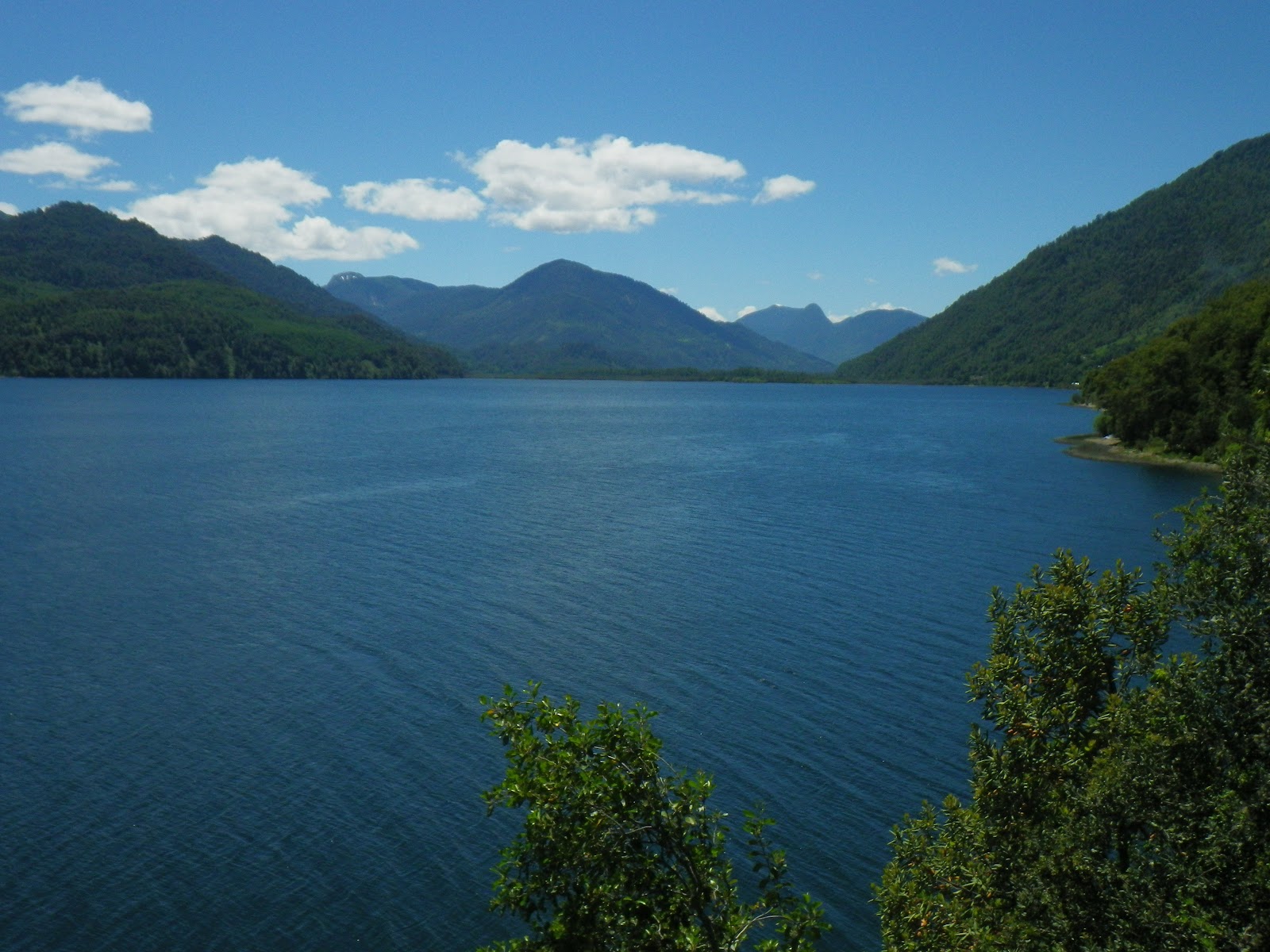
Lake Neltume
Meanwhile spring has turned into summer and as always Inés and I have not been lazy. The Cafeteria is ready to use, the garden does not look like a construction place anymore but like a real garden and sun is shining on everything with its best smile. What we had to do now is some promotion that people will know about our place and find it as well. So Inés went to Santiago to let some flyers be printed. I stayed at home meanwhile organizing everything here and learning a lot with the kids for their last exams in school which will end in one more week. It seems we have not done this that bad because as it looks like they all will have quite good marks this year. It was good fun being at home with them alone allowing me to train my Spanish skills and learn for example about Chilean history. So it was a kind of win-win situation. Nevertheless I had been quite lucky when Inés finally came back. I definitely needed some rest and relaxation then, which I found in various ways. Once I went as a driver for my rafting company with tourists to some hot springs which is a nice thing because it gives me the opportunity to take a relaxing bath and even get payed for it.
Another day I took a bus and went for two days to the southern side of the Villarrica Volcano to a small village called Conaripe on the shore of Lake Calafquén. It is a nice remote village with a big black beach and  at this time of the year almost deserted. I spent some time on the beach reading (it is still too cold for taking a bath - at least for myself although you can already see some brave Chileans in the water), walked around the village, ate good plain fare and ejoyed the tranquility of the place. The next day I took a bus to the Pellaifa Lake and hot springs. A place which I have not known so far. It was a journey of an hour over a gravel road that led over a small mountain pass into a lovely green valley surrounded by already high peaks of the Andes. The hot springs had just been open because I came there that day. Apart from me there had just been a father with his daughter. So the three of us had the whole termal complex - four pools of different water temperatures - for our own. The only sound apart from the wind and some birds singing in the trees came from the owner of the hot springs who was still constructing a bungalow for the high season. I spent the whole day over there and at the close lake which is embedded in between green hills. Hundreds of dead tree trunks jutting out of the water surface of the lake give it an ancient, mystic touch which was topped by various llamas browsing on the shore. In the evening I took the bus back to Pucón not without it breaking down so that I had to change the bus to finally get home.
Another day I borrowed a motorcycle of a friend to make a day trip to another corner of the country so far unknown to me. Two of our children had been with their school band at a band meeting in the small town of Panguipulli at the lake of the same name. As a surprise for them I went there to watch them. For the band meeting took place in the afternoon I had the whole morning to ride around. I started early morning towards Conaripe and Pellaifa again but then kept on going even deeper into the Andes towards Neltume. It is an amazing gravel road over there, more a cart track than a road at some parts, winding through an even more spectacular landscape. At the end of it you come to the south side of Lake Panguipulli where from a newly built asphalt road meanders in great curves along the lake without any traffic seen on it. It is a real motorcyclist's paradise giving you tremendous views of the lake and the mountains surmounted by the impressing massif of Volcano Choshuenco. What a ride! Finally I came with quite a high level of adrenalin in my blood to Panguipulli on the lakes northern shore right in time to watch Amanda and Adriano defiling with their band. The expression on their faces when they suddenly saw me there within the spectators was quite surprised.
I had lunch in a small restaurant in Panguipulli and then rode back to Pucón over some more unknown roads enjoying countless great views. Someday -better sooner than later - I will have to buy me a motorcycle to be able to start on such trips whenever I want to. There are so many wonderful roads over here and because many of them are still gravel roads it is a unique chance to train ones driving skills.
So I can start into the high season quite relaxed. I am already looking forward to nice times on the river even more because last week came my friend Bernhard from Austria who, like last year, will spend the summer here in Pucón.
But first it is up to me now promoting our cafeteria in all the hotels, hostels and tour operators in town that it will be a success as well.

Thursday, 8 November 2012

A Breakthrough

New Colours of Spring in Front of the Cafeteria
Spring finally came and I restored my health totally. We used the last eventually warm but still inconstant weeks to create the garden around our cafeteria. During the week Inés and I planted lawn, bushes and flowers, built paths, replanted trees, watered, leveled, shoveled and raked like crazy. On the weekends even the children helped us and all together played mole. It was very funny and everybody slept very well during the nights and long in the mornings. That was really superb! Now the lawn is already springing and in every corner something is blooming.
Then I built a garden terrace out of old timber that was full with nails. It was one of the most terrible works I had ever done, the timber being horribly hard and all the nails, which I had to pull out of it, rusty. I almost despaired of it but roughly speaking I can say that it was worth all the effort. The whole area has a much warmer, more ordenated and more welcoming appearance now. I tend towards saying that it really looks great. At the end we hung the hammocks and so our little paradise is ready to use.
Right in time for this we also found an almost legal way how to achieve an official permit. That for we just have to make a few little adaptions and changes and at the end of November all papers should be ready to gain the municipal permit. Which according to a hint given to us by the municipality itself (!) we will only do in January to avoid paying fees for the whole second half-year of 2012. We will get a permit as a sandwicheria which means we will be allowed to make sandwiches (sic!) and similar small food like salads, toasts, hamburgers, hot dogs and so on. The sauna we will run without any official permission due to the fact that the term 'sauna' simply does not exist in the Chilean law. Our menu nevertheless will exist of more 'exotic' food like soups, lots of vegetables, toasts, Austrian delicacies, cakes and pastries. Many of that not really according to the permission but as the sanitary inspector himself told us, if not someone will make a report nobody will make us any problems.
That we will really get any permission I surely only will believe when I am holding it in my hands.
The cakes which I am making myself meanwhile already have become an unexpected success especially the typical Austrian Sachertorte. People ordered whole cakes to take them home. Because when starting a new business you have to kind of prostitute yourself, I took the order and so started a new unexpected "branch" of my business. So Wolli is even an confectioner now.
The next project will be to make calendula unguent to sell it. I am already looking forward to that.

Friday, 21 September 2012

National Holiday in Late Winter

Typical Banquete With My Family for the  National Holiday
September in Chile always is affected by its national holiday on 18th which usually is solemnised with a week of big celebrations, parties, asados, crapulence and ebriety. This year it was also affected by the return of winter which until than had been much too dry and warm. This for after already having been quite comfortable in August weather turned cold and rainy again and keeps being it. For me already being an old man as I seem to be who apart obviously had kicked over the traces when in Austria this meant and still means a time of instable health. The last three weeks I was assailed by various illnesses like bronchitis, sinusitis, cold which decided to stay with me quite insistently. So I spent most of this time at home if not in bed or in doctor's surgeries taking antibiotics, sleeping and self-pitying. Fortunately Inés as a multiple mother immediately adopted me as ninth child and took care for me and pampered me like only a mother can do it. So today I am definitely much better already only suffering from a simple rhinitis. Nevertheless we celebrated September 18th but just at our house with kids and friends. We had been really lucky for 18th being the only sunny and warm day in between long times of rainfall. So we had an asado at our house with beef which we freshly had received of our neighbour's former cow in a 25 kg piece of its shoulder. We played carrom in our garden, balanced on the slackline and had lots of fun. But Inés and I did not go out in the night for not being quite well both of us.
Being at home so many days gave me a lot of time to work in and for the sauna. Meanwhile it is fully running, this week of the national holiday being a first proof for its success. And we are quite content. For sure  there could be more clients always but we had folks as well in the sauna as in the cafeteria even asking for massages and yoga, services we just intend do offer in summer. And we have a couple of regular guests already as well. Most important of all that everybody who came was quite impressed and really liked the place, the food and the service. So word-of-mouth advertising machinery started working and as commonly known it is the best promotion you can get. Apart from that it is really comfortable and satisfying to work on your own in your proper business where you can arrange and do everything as you like it. Besides I like cooking and baking and offer good food to guests that they feel fine so I mainly just can be myself in the business. What more do I want?
For sure I also spent a lot of time not only with Inés but with the kids. We spent hours playing "Siedler",   cards and Carrom, which is the new common addiction in our house. I learned with them for college and even went to parents-teacher-meetings and participated in a parent's run where I, making a big show for all the kids out of it, came in second (!). Looks that old I am not yet.
On days not being that sick I already had been to the river as well a few times. Another work that really is fun to me. Just due to the dry winter we already have a water level as low as normally at the end of December which means we are going to have a very rocky and technical season. Well, as soon as tourists come and go rafting and canyoning I won't complain.
I just hope that this late winter ends soon and a real spring and summer are going to come shortly.

Tuesday, 21 August 2012

Back in Chile

 O'Higgins Park Santiago - One of the City's  Biggest Parks Close to  Downtown

After I had spent more than three great months in Austria I finally came back to Chile on August fourth. The flight was without any complications and delays. Only leaving Santiago airport this time took two hours because now they are x-raying all the luggage of incoming passengers (!) and most of the international flights are landing early morning as did mine. This caused a long queue at the x-raying machines. Well, finally I could Inés who was waiting in the arrival hall take in my arms again. As you can imagine the reunion was happy and intense. We spent a few days in Santiago, celebrating ourselves together again, enjoying the best of Chilean kitchen like seafood, beef and huge homemade burgers, Fantasilandia, a big amusement park in Santiago and watching Ice Age 4 in cinema which was quite a good training for me to get used to Spanish again.
Three days later we took the overnight bus to Pucón, where we arrived early morning. The reunion with the kids was quite emotional as well. Seems like they really missed me. My original plan to take some days to stay with the family in the beginning worked out perfectly due to an influenza virus brought by Mati, Inés’ grand son, that let stay in bed  half of the kids as well as myself for almost a whole week. So I had a lot of time to enjoy big family life again, in which fell Adriano’s 11th birthday which for I made a typical Austrian Sacher Cake. These days also my Indian carom board which I had sent from Austria to use it as a new attraction in the cafeteria arrived. It is the Indian national game comparable to pool billiard played on a wooden board of about 1 per 1 meter which weighs 12 kilograms. The Chilean customs obviously did not know what it is and asked me for an official bill or a proof of any bank transaction thinking I would use it for commercial purpose. Only after I had sent them an explaining e-mail that this is all just private stuff they delivered the package. Now I am training my carom skills (which degreased a little bit over the last years) again together with the kids who are really fascinated by the game that can really be addictive.
Apart from that I started to prepare the sauna/cafeteria for the coming season. Inés really had done great work while I had been to Austria and made the place a comfortable and cosy one where someone would like to stay. Now it is up to me to make some last manual adaptations and improvements so that we can bear a lot of customers. So far once in a while people are coming and I already served my first customers which had been to a sauna the first time and had been quite pleased. So it seems people like it and now our place just has to get known. In September when is the Chilean national holiday and Pucón gets crowded the first time after the winter we will know more about the success of our business. Let’s keep our fingers crossed for it!

Wednesday, 25 April 2012

High Season and the End of a Neverending Story

The finally finished sauna and cafeteria
High season was intense, hard work but funny and succesful. This year I learned to raft with oars (two big paddles assembled by a metal frame to the boat - a very different kind of manoeuvring the boat)and guided a lot of canyoning so that I consider myself to be a real canyoning guide now. We had some tasty 'asados', a few good parties, fantastic summer weather all the time and lots of fun. Nevertheless at the end of the season all were happy that it had ended because it was daily hard work for almost two months. Everybody was eagerly awaiting quieter times but for Inés and me they had not yet come. We still had to repair our sauna to finally get it started. After intense, long searching we finally found a ´maestro´ who seemed to be able to do it well. We contracted him and indeed he did good work and finished all within ten days. Now we just had to organize all the final cleaning, permits, design, papers and so on which kept us three more weeks very busy. At the end we could happily celebrate inauguration on 15th of April. We did it inviting some friends to an 'asado', showing them everything and heating the sauna. Now just the grass of the lawn we planted has to grow and people have to frequent us regularly to make the business a success. We are very, very happy that we finally could finish that long and annoying chapter of the construction of the sauna. It really had reduced us to despair several times and had led more than once to discussions and arguments. So to terminate with all that was a big step forward.
Another one was that in February I finally got my permanent stay permit for Chile. The official channels had lastet half a year but it was worth waiting. With getting the permit there is another worry less. No more disillusioning administrative paperwork and barriers. No more deadlines to be missed. So now I can stay in Chile as long as I want to but nevertheless will spend the next months in Austria. Unfortunately Inés has to get the sauna started on her own now and I will just be informed about anything that happens with it. It´s a pity that I can not work in my own businnes now that it had costed me so much of nerves, time, afford and money but I already had decided to come back to Austria for work once more due to the insecurity of a future income before we had found the 'maestro' who finally repaired the roof of the sauna. Bad luck but nevertheless I am going to enjoy my time back home.
Besides the self-styled architect who had betrayed us with the construction of the sauna was sentenced to a fine and six months of social work in the penal trial. This is also a success for us because now everything is free for a most probably successful civil action which we already started.
Those were the last things that had happened in Chile. A few days ago I already arrived in Austria. I will be working on the river Salza in Upper Styria in May and June, have holidays in July and fly back to Chile at the beginning of August. I hope to see as many of you as possible in the next three month and all of you keep your faith in reading my Chilean adventures from august onwards.

Tuesday, 28 February 2012

A Cultural Journey

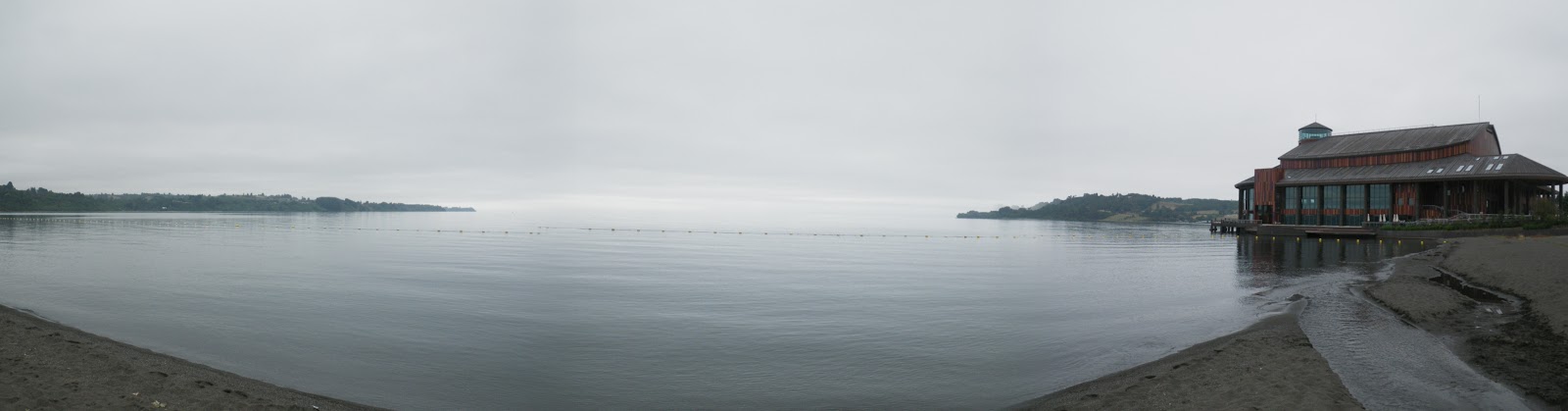
Llanquihue Lake with the 'Teatro del Lago'
December was already quite busy on the river and the summer weather from November continued. The first half of January - like every year - was a little lazy and before the real high season started on 15th, Inés and I went on a small motorcycle trip to the south to relax a few days before I would have to work without a single break until the end of February. It was Inés´ Christmas present. She always had had the wish to watch an opera once, which in Chile is quite an upper class event. Last year in the small borough of Frutillar at the shore of Llanquihue Lake a concert hall had been opened, mainly to house their yearly musical festival but with program all year round. Their first opera ever performed there now in January was „The Magic Flute“ by Wolfgang Amadeus Mozart.
I hired a Honda Falcon 400ccm Motorcycle from a friend and we started a three day trip. I enjoyed driving a bike again after almost two years, especially because the journey brought us to places I had not known so far. On the first day we left towards Ranco Lake bypassing the scenic lakes of Calafquén and Panguipulli. First it was all paed road but the further we came from the densely populated planes and towards the Andes Range the more gravel roads we had to face. Driving them especially with a pillion was quite an adventure for an asphalt spoiled European rider like me. But it was a good practice for future trips because here in Chile you have to face gravel roads regularly. Nevertheless we went ahead fast and so had time to circle Ranco Lake to the Eastern side. There the Andes mount up quite steeply directly from the lake. Not for nothing this part of Chile’s South in Central Europe is generally known as the Switzerland of Chile. Scenic lakes at the edge of the Andes, surrounded by planes and gentle hills on their Western side, while steep hills and bold mountains mount up on their Eastern sides. The deeper we drove into the mountains the more the landscape turned into a black and white scenery and the sun disappeared behind a huge monochrome grey cloud. We had come close to Puyehue Volcano which started to erupt last June which brought him into worldwide medias for a few weeks but meanwhile is still spitting lots of ashes everyday leaving the surrounding population buried under a constant layer of ashes hiding the sun for months.
We stopped for the night in the small village of Lago Ranco where we found a friendly, familiar hostel. Although it was already a little further off the cloud of ashes, the black motorcycle had turned into grey after the night in front of the house covered with a layer of ashes. The next day we went on to Frutillar. We decided to take mainly paed roads to relax our bottoms after all the gravel of the day before. So we soon reached the idyllic Llanquihue Lake with its amazing panoramic view of four volcanoes. We checked in in a small family run hostel where we had a shower and changed for the opera. The concert hall called “Teatro del Lago” is an impressive general purpose building including several concert and exhibition halls a cafeteria a restaurant and a shop constructed on the shore reaching over the water of the lake. The performance of the opera was in its original German version which I liked very much. German speaking as well was at least half of the audience. You saw typical German clothes and heard German dialects all over the theatre. It seemed like every German/Swiss/Austrian living in Chile or visiting it at that time had come there. It was like breathing native air to me. When we left the theatre after the performance the four volcanoes on the other side of the lake were illuminated in breathtaking colours by the sunset. It was a worthy ending of the spectacle. We finished the day in one of the many restaurants offering good German influenced food, because Frutillar was the centre of the German immigration to Chile in the second half of the 19th century. The next day we drove back to Pucón taking a bath in Panguipulli Lake on the road. So we started relaxed and filled up with impressions into the high season to come.

Saturday, 24 December 2011

Good Times

The Bridal Couple
Fortunately not everything is going badly. We also had a lot of time to enjoy and celebrate these months. First of all Inés and I got married in November. To this occasion some of my freinds and my sister from Austria came to visit us. So I had the great chance to pass some time with good old friends from home, aspirating a little home spirit, having good conversations in mother tongue and showing them something of my new home. We climbed the volcano, rafted the river, went to hot springs, watched the Pacific Ocean (for bathing over there it still had been too cold), hiked in national parks in between ancient monkey puzzle tree forests and let us enchant of Valparaísos magical spirit. It was a great time which highlight was the wedding party on the pool, with lamb on a spit and lots of pisco (and for sure other drinks). The next day we have had quite a hangover but two days later cured the rest of it cooling down in the floods of Trancura River just to climbe the volcano the next day. Like always these good times always pass by much too fast and soon everybody had to go back to Austria and daily routine came back to my life. Sweetend by the arrival of Bernie, a rafting comrade from Austria who is visiting Chile right now. With him the Austrian spirit keeps on blowing through Pucón. Sadly he soon will go on travelling more south but the weeks with him were brilliant and today we will celebrating Christmas together with my family here. Having said this I wish you all a Merry Christmas! May it be blessed and unhurried!